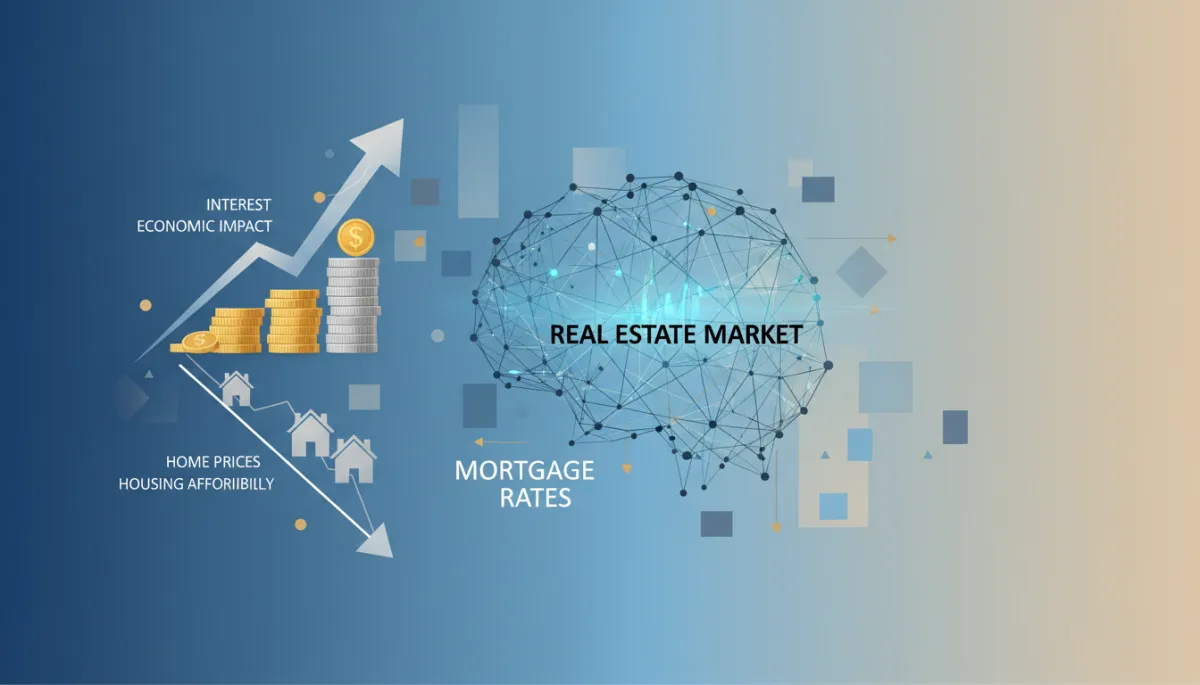
How Interest Rates Affect Home Prices
Personal Finance, Real Estate Market, Housing Affordability
How Interest Rates Influence Home Prices (Without the Confusion)
Thinking about buying a home but feeling lost when people start talking about interest rates, the economy, and the real estate market? You are not alone. This guide breaks down how interest rates affect home prices, mortgage payments, and housing affordability in clear, everyday language.
What Are Interest Rates, Really?
At their core, interest rates are simply the price of borrowing money. When you take out a mortgage, you are renting money from a lender. The interest rate is the fee you pay for that privilege, expressed as a percentage of the loan amount each year. Higher interest rates mean borrowing is more expensive; lower interest rates make borrowing cheaper.
Central banks, like the Federal Reserve in the United States, influence interest rates to keep the economy stable. When inflation is high or the economy is overheating, they may raise rates. When growth slows or a recession hits, they often cut rates to encourage borrowing and spending. These moves ripple through the entire real estate market.
Mortgage Rates: The Bridge Between Interest Rates and Your Payment
When people talk about interest rates and housing, they usually mean mortgage rates. Mortgage rates are the specific interest rates lenders charge on home loans. They are influenced by central bank policy, inflation expectations, and investor demand for bonds, but you experience them most directly as the rate on your 15- or 30-year mortgage.
Even a small change in mortgage rates can have a big impact on your monthly payment. For example, on a $400,000 loan:
At 3% interest, your principal and interest payment is roughly $1,686 per month.
At 6% interest, that jumps to about $2,398 per month.
Same house, same loan amount, but a difference of more than $700 every month. That is why buyers and sellers pay such close attention to mortgage rates: they directly shape what buyers can afford and, in turn, what home prices the market can support.
How Interest Rates Push Home Prices Up or Down
To understand how interest rates influence home prices, it helps to think in terms of demand. Most people do not buy homes with cash; they rely on mortgages. When mortgage rates are low, monthly payments are more manageable, so more people can qualify for loans and feel confident bidding on homes. Demand rises, and that extra competition tends to push prices higher.
The opposite happens when interest rates climb. Higher rates mean higher monthly payments for the same loan amount. Some buyers are priced out entirely; others must lower their budget. Fewer qualified buyers means less demand, and that can slow price growth or even cause prices to soften in some areas of the real estate market.
💡 Simple way to remember: Lower interest rates usually support higher home prices; higher interest rates usually put downward pressure on prices, especially over time.
The Economic Impact Behind the Scenes
Interest rates do not exist in a vacuum. They are part of the broader economic impact of government and central bank decisions. When rates are low, borrowing is cheaper for everyone: homebuyers, businesses, and governments. That often leads to more spending, more construction, and more job creation, which can further boost demand for housing and support rising home prices.
When rates rise to fight inflation, the effect can be cooling. Businesses may delay expansion, households may cut back on big purchases, and some potential buyers may decide to rent longer. The real estate market often slows, with fewer transactions and more homes sitting on the market. Prices do not always fall immediately, but growth can stall as buyers and sellers adjust to the new reality.
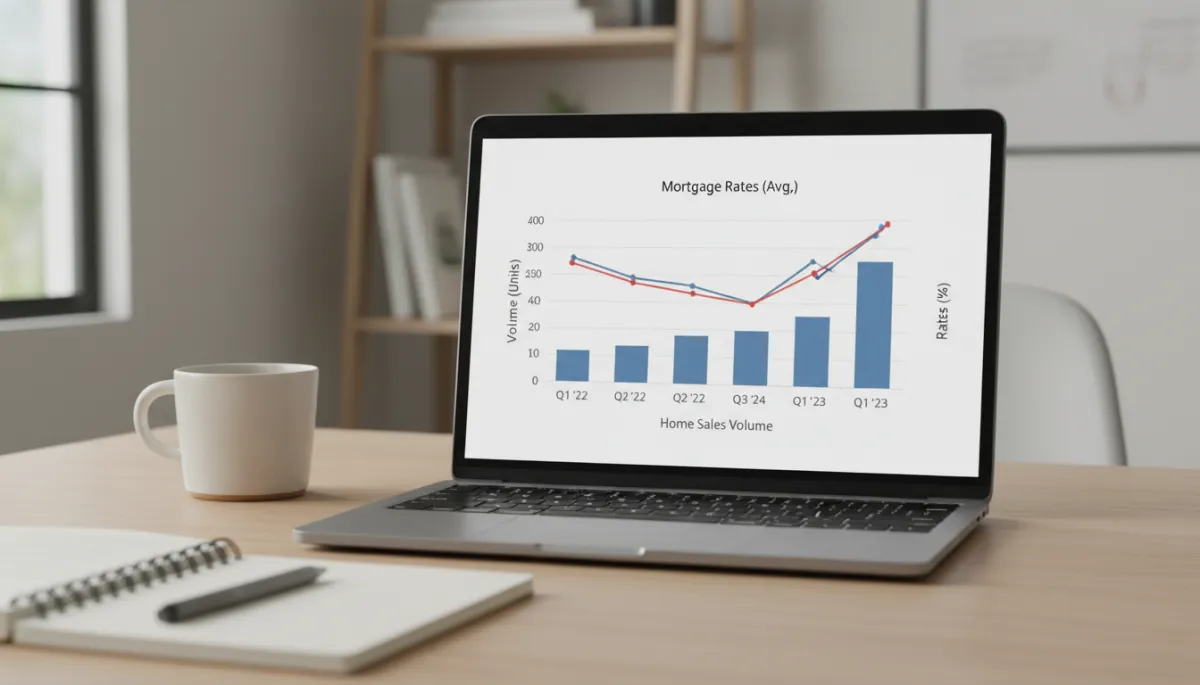
Rising mortgage rates often cool buyer demand before home prices fully adjust.
Housing Affordability: It Is Not Just About the Sticker Price
One of the biggest misunderstandings in housing is focusing only on the purchase price. Housing affordability is really about the monthly cost of owning a home: mortgage payment, property taxes, insurance, and maintenance. Interest rates play a starring role in that monthly picture, because they determine how much you pay to borrow for the life of the loan.
Here is a simple way to see it. Imagine two scenarios for the same buyer:
Low-rate world: Mortgage rates are 3%. The buyer can comfortably afford a $500,000 home because the monthly payment fits their budget.
High-rate world: Mortgage rates jump to 7%. To keep the same monthly payment, that buyer may now only qualify for a home around $350,000–$375,000.
Nothing about the buyer's income changed, but their purchasing power shrank because of higher interest costs. This is why periods of rapidly rising mortgage rates can feel like an affordability crisis, even if home prices have not fallen yet. The combination of high prices and high rates squeezes many would-be buyers out of the market.
💡 Practical tip: When you evaluate affordability, focus on the monthly payment you are comfortable with, not just the price tag. Then see what that payment translates to at today's mortgage rates.
Why the Real Estate Market Does Not React Overnight
You might expect home prices to fall the moment interest rates rise, but the real estate market moves more slowly than stock markets. Sellers may still be anchored to last year's prices. Homeowners with ultra-low mortgage rates may be reluctant to sell and take on a more expensive loan, reducing the number of homes for sale. This low supply can keep prices elevated, even when demand weakens.
Over time, though, the forces of supply and demand usually win. If higher interest rates persist, some sellers become more flexible, builders may slow new construction, and buyers get used to the “new normal.” In some regions, prices may simply grow more slowly; in others, especially where prices ran far ahead of local incomes, they may decline to restore housing affordability.
What This Means for You as a Buyer or Homeowner
Understanding the relationship between interest rates and home prices is not about timing the market perfectly. It is about making informed decisions that fit your life. Here are a few practical takeaways for individuals navigating today's real estate market:
Run the numbers at different mortgage rates. Ask your lender for payment estimates at a range of rates. This helps you see how sensitive your budget is to rate changes and where your comfort zone truly lies.
Think in terms of time horizon. If you plan to stay in a home for many years, a slightly higher rate today may matter less than finding a place that truly fits your needs. You can always explore refinancing later if rates fall.
Watch both prices and payments. In a high-rate environment, home prices may soften, but if rates are still elevated, your monthly cost might not drop as much as you expect. Always bring the conversation back to your total monthly housing cost.
Consider your broader financial picture. Interest rates affect more than mortgages. They also influence credit card rates, car loans, and even the returns on your savings. A balanced plan looks at your entire budget, not just your potential mortgage.
Bringing It All Together: A Clearer View of Interest Rates and Home Prices
When you strip away the jargon, the connection between interest rates, mortgage rates, and home prices is straightforward. Lower borrowing costs tend to boost demand and support higher prices; higher borrowing costs usually cool demand and put pressure on prices, especially over time. These shifts have a real economic impact on families, neighborhoods, and the broader housing market.
For individual buyers and homeowners, the key is focusing on what you can control: understanding how rates affect your monthly payment, staying realistic about housing affordability, and making decisions that align with your income, savings, and long-term plans. You do not need to predict where rates will be next year to make a smart move today; you just need a clear picture of how they shape your options right now.
By viewing the real estate market through this lens, the headlines about rate hikes and price swings become less intimidating and more informative. Instead of reacting in fear, you can respond with a plan grounded in numbers, context, and your own priorities. That is how you turn a confusing topic into a confident step toward the right home for you.