
What Buyers Notice in First 5 Minutes of a Showing
Real Estate, Home Buying Psychology, First Impressions
What Buyers Notice Within the First Five Minutes of a Showing
Those first few minutes inside a property can quietly determine whether a buyer feels compelled to make an offer—or to move on. Understanding the psychology behind these snap judgments can help you present a home that instantly resonates and stands out in a crowded market.
The Psychology Behind Those Crucial First Minutes
Home Buying Psychology is rooted in how the brain processes new environments. When buyers walk into a property, their brains are working quickly, making rapid assessments based on visual cues, smells, sounds, and even how they feel moving through the space. These judgments often happen before they have consciously registered specific details like square footage or the age of the roof.
Psychologists call this the primacy effect: information received early in an experience carries more weight than what comes later. In Real Estate Showings, this means that the initial entry, the first sightline, and the early sensory impressions strongly influence Buyer Perception of the entire property. A home that feels bright, calm, and well cared for in the first five minutes is more likely to be remembered positively, even if a few flaws appear later in the tour.
📌 Key Takeaway: Buyers rarely make purely logical decisions. Emotional responses formed in the first moments of a showing often guide how they interpret every feature that follows.
First Impressions: What Buyers See Before Anything Else
First Impressions begin before a buyer ever crosses the threshold. The exterior, walkway, and front door signal how the rest of the property has been maintained. A freshly swept entry, trimmed landscaping, and a clean doormat send a subtle but powerful message: this home is cared for and worth your attention.
Curb appeal: Peeling paint, overgrown shrubs, or cluttered porches prime buyers to look for additional problems inside, lowering overall Property Appeal before the tour truly begins.
Front door moment: The few seconds spent unlocking and opening the door are surprisingly influential. A solid, clean door and a working lock communicate security and quality.
Once inside, buyers instantly register lighting, clutter, and cleanliness. A bright, open entry with clear pathways and minimal visual noise allows them to relax and imagine themselves living there. A dark, cramped, or messy entrance creates tension and makes it harder for them to connect with the space emotionally.
How Buyer Perception Forms in the First Five Minutes
Buyer Perception is not just about what buyers see; it is about what they infer. In those early minutes, they are asking themselves silent questions: Is this home well maintained? Does it feel spacious? Can I picture my life here? Their brains quickly connect small details to larger assumptions about the property.
Smell and sound: Lingering odors, loud traffic noise, or a constantly running fan can signal hidden issues. Conversely, neutral scents and a calm soundscape support a sense of comfort and safety.
Temperature: If a home feels too hot, too cold, or stuffy, buyers may unconsciously question the efficiency of the heating and cooling systems, even before they see the mechanicals.
Flow: How easily they can move from the entry into the main living area shapes their sense of layout. Awkward furniture placement or blocked hallways can make a home feel smaller and less functional than it truly is.
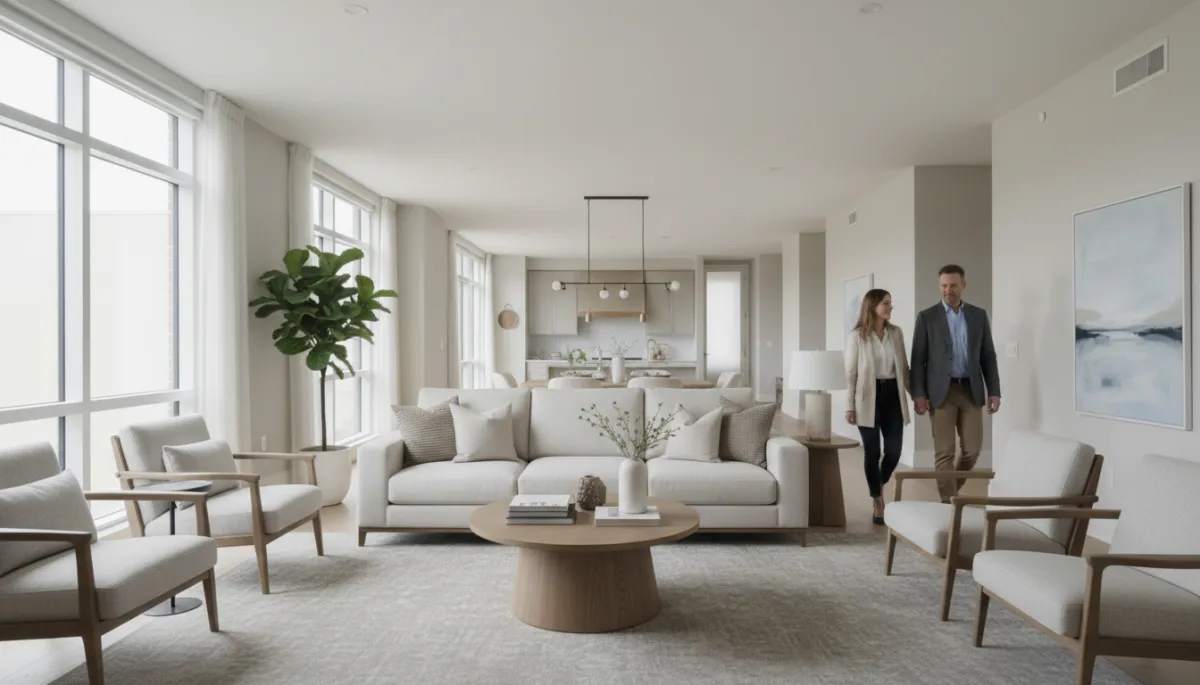
Thoughtful staging guides buyer perception toward comfort, space, and livability.
Property Appeal: The Small Details That Matter Most
Property Appeal in the first five minutes is less about high-end finishes and more about condition and coherence. Buyers are not yet comparing countertop materials; they are noticing whether the home feels consistent, intentional, and well maintained. This is where small, inexpensive improvements can have an outsized impact on Real Estate Showings.
Cleanliness: Shiny floors, dust-free surfaces, and smudge-free windows tell buyers that the home has been cared for. Dirt and grime suggest neglect and raise questions about what else may have been overlooked.
Neutral palette: Soft, neutral wall colors and simple decor make it easier for buyers to mentally insert their own furniture and style, a key aspect of Home Buying Psychology. Bold or highly personal design choices can distract them from the home’s underlying strengths.
Lighting: Open blinds, updated light fixtures, and consistent bulb color temperatures create a cohesive, inviting atmosphere. Dim or mismatched lighting can make even a well-kept home feel dated.
💡 Pro Tip: Walk through your home as if you are a first-time visitor. Note the first three things that catch your eye—and address anything that distracts from a calm, welcoming feel.
Showing Tips to Maximize Those First Five Minutes
Translating Home Buying Psychology into practical action requires intention. The following Showing Tips focus specifically on what buyers are likely to notice in the first five minutes and how you can manage those impressions strategically.
Start with the approach. Ensure the path to the front door is clear, safe, and visually appealing. Sweep walkways, remove cobwebs, and add a simple, neutral welcome mat. This sets the tone for the entire Real Estate Showing.
Declutter the entry. Remove excess shoes, coats, and personal items from the foyer. Buyers should be able to step inside without navigating around belongings. A single, tasteful piece of art or a small console table is often enough.
Control scent and air quality. Aim for a neutral, fresh smell rather than strong fragrances. Open windows briefly before the showing if weather permits, and avoid heavy cooking odors on the day of the visit.
Optimize lighting. Before buyers arrive, turn on key lights, especially in the entry and main living areas. Replace burnt-out bulbs and choose warm, consistent tones that flatter the space.
Stage the first sightline. Stand at the front door and look ahead. What do you see first? Arrange furniture and decor so that buyers are greeted by an inviting view—a comfortable seating area, a clean dining table, or a glimpse of outdoor space.
Minimize visual noise. Remove busy patterns, excessive family photos, and large collections. Simpler spaces give the brain less to process, allowing buyers to focus on room size, light, and layout.
Aligning Logic and Emotion for a Strong Overall Impression
While the first five minutes of a showing are dominated by emotion, buyers will eventually shift into a more analytical mode, asking about storage, mechanical systems, and neighborhood data. The most successful properties are those where the emotional impression and the logical facts reinforce each other rather than conflict.
A home that feels inviting, well maintained, and thoughtfully presented encourages buyers to interpret objective details more generously. For example, a slightly smaller square footage may feel perfectly adequate if the layout flows well and the first impression is positive. On the other hand, even strong features can be overshadowed if the initial experience is chaotic, dark, or uncomfortable.
Turning Insight into Action as a Seller or Buyer
For sellers, understanding First Impressions and Home Buying Psychology offers a clear roadmap: invest time and modest resources into the areas buyers notice first. Focus on entry appeal, cleanliness, neutral styling, and sensory comfort to elevate Property Appeal without necessarily undertaking major renovations. These targeted adjustments can translate into stronger offers and a faster sale.
For buyers, being aware of your own Buyer Perception can help you make more balanced decisions. A beautiful entry should prompt you to ask: does the rest of the home live up to this first impression? Likewise, if the first few minutes feel underwhelming, it may be worth looking past minor presentation issues to evaluate the property’s true potential. Recognizing how quickly judgments form allows you to separate surface-level reactions from long-term suitability.
Ultimately, Real Estate Showings are not just about walking through rooms; they are about shaping a story in the buyer’s mind. When that story begins with a calm, confident, and appealing first five minutes, every feature that follows is seen through a more favorable lens. By honoring both the emotional and practical sides of the process, you position any property—and any purchase decision—for success.