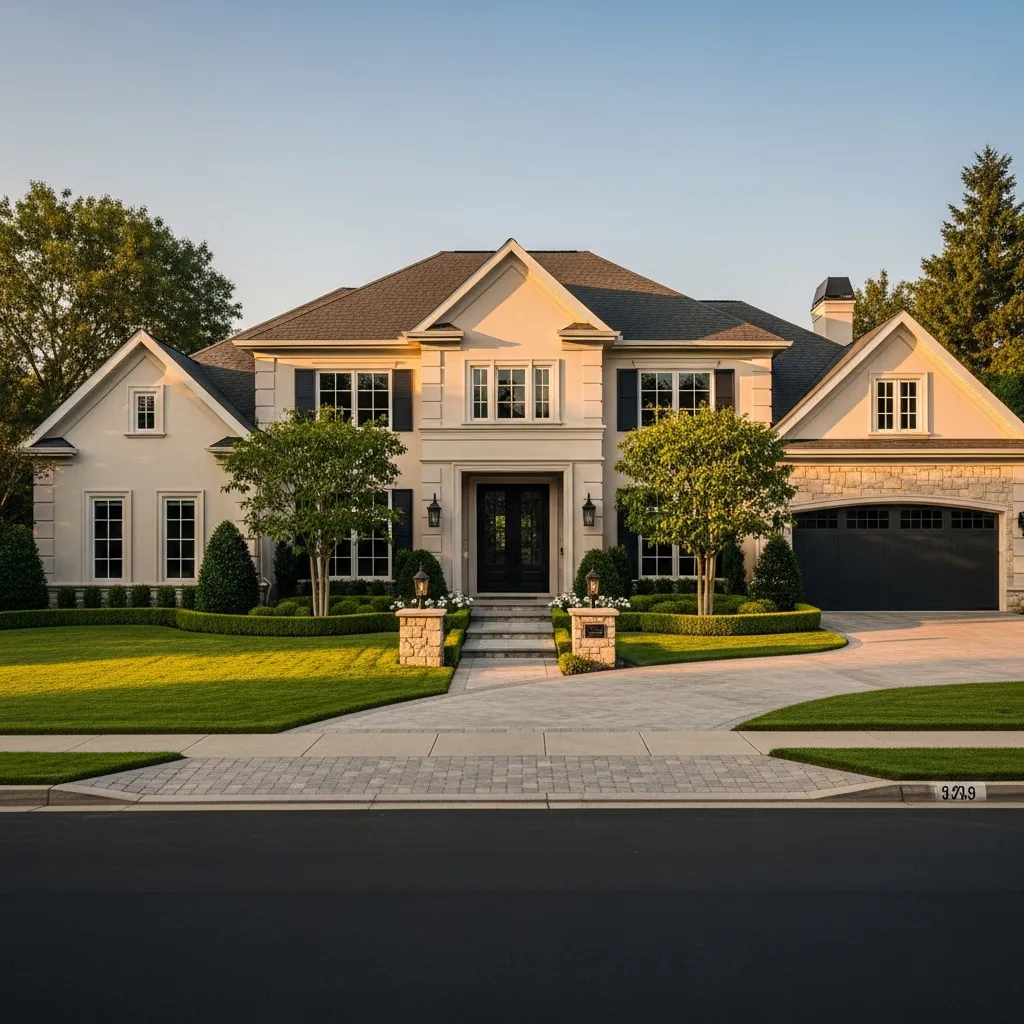
Should You Buy the Biggest House in the Area?
Real Estate, Home Buying Tips, Property Investment
Should You Buy the Biggest House in the Neighborhood?
Many buyers dream of owning the biggest house on the block. It feels like a status symbol, a sign that you have “made it.” But from a financial and lifestyle perspective, that decision is more complex than it appears. Understanding how the biggest house affects Neighborhood Value, resale potential, and long-term Property Investment performance is essential before you sign on the dotted line.
Why the Biggest House Can Be a Double-Edged Sword
In real estate, context matters. A property’s value is influenced not only by its own features, but also by the surrounding homes. When you buy the biggest house in the neighborhood, you may enjoy more space, higher-end finishes, and added prestige. However, you also risk “over-improving” for the area, which can limit appreciation and make resale more challenging.
Appraisers and buyers typically look at comparable sales—similar homes in the same area—to determine value. If your home is substantially larger or more upgraded than anything nearby, there are fewer true comparables. That often leads to more conservative valuations, even when you have invested heavily. From a Real Estate Advice perspective, being at the very top of the local price range is rarely the safest move if maximizing return is a priority.
How Neighborhood Value Shapes Your Investment
Neighborhood Value is one of the most powerful forces in residential real estate. A modest home in a highly desirable neighborhood can outperform a luxury property in a weaker location over time. When you consider the biggest house, ask whether the surrounding homes and amenities support your purchase price and your expectations for future growth.
Price ceiling: Every area has an approximate upper limit for what buyers are willing to pay. If your property is already at or above that ceiling, appreciation may be slower than in mid-range homes that still have room to grow.
Perceived mismatch: A large, luxury home surrounded by much smaller or older properties can feel out of place. Some buyers worry that the neighborhood will not “catch up,” which can reduce demand when you eventually sell.
Upward pull vs. downward drag: While your home can help raise perceived values slightly, it is more common for the surrounding lower-priced homes to pull your value down toward the local norm.
📌 Key Takeaway: The strongest Property Investment often comes from buying one of the nicer homes in a solid area, not the single standout that towers over everything else.
Practical Home Buying Tips for Evaluating the Biggest House
If you are drawn to the largest home on the street, you do not necessarily need to walk away. Instead, approach the decision with clear, data-driven Home Buying Tips and a realistic view of your goals. Consider the following steps before making an offer.
Study recent sales carefully. Ask your agent for comparable sales over the last 6–12 months. Note how close those sale prices are to the asking price of the biggest house and how long similar high-end properties took to sell.
Look at price per square foot. A home that is larger will often have a lower price per square foot than smaller homes, but the total price will still be higher. Make sure the per-square-foot number is not dramatically above neighborhood norms without a clear justification.
Assess your time horizon. If you plan to stay for a decade or more, short-term fluctuations in Neighborhood Value may matter less. If you might need to sell within five years, you should be much more cautious about stretching to the top of the market.
Examine carrying costs. Bigger homes typically mean higher property taxes, insurance, utilities, and maintenance. Factor these into your budget alongside the mortgage payment so you understand the true long-term cost of ownership.
Consider lifestyle fit. Extra space is only valuable if it aligns with how you live. Oversized rooms you rarely use may not justify the premium, especially if they limit your ability to invest in other goals.

Careful analysis of space, budget, and resale potential supports smarter purchase decisions.
The Biggest House as a Property Investment: Pros and Cons
From a pure Property Investment perspective, the biggest house can perform well under the right circumstances, but it carries more risk than a well-located, mid-range option. Weigh these advantages and drawbacks as you evaluate your strategy.
Pros: You may enjoy superior construction, premium lots, and custom features that are difficult to replicate. If the area continues to improve and surrounding homes are renovated or rebuilt, your home may benefit significantly from rising Neighborhood Value.
Cons: You are targeting a narrower pool of future buyers—those who want a large home and can afford the upper end of the neighborhood. In soft markets, these buyers may prefer established luxury areas instead, leaving your home on the market longer and vulnerable to deeper price cuts.
💡 Pro Tip: Treat a primary residence as both a home and an asset. Emotional appeal matters, but solid Real Estate Advice and hard numbers should drive the final decision.
Housing Market Trends and Their Impact on Large Homes
Housing Market Trends can magnify the risks and rewards of owning the biggest house. In hot markets with low inventory, even oversized homes can sell quickly. Buyers may be more willing to stretch for extra space or high-end finishes, especially if remote work or multigenerational living is driving demand for larger floor plans.
In cooler markets, however, the story changes. As interest rates rise or economic uncertainty grows, buyers tend to prioritize affordability and flexibility. Mid-priced homes that fit a wide range of budgets and lifestyles often remain in demand, while top-tier properties see slower activity. If your home sits at the very top of the local price range, you may need to be more aggressive on pricing or offer concessions to attract qualified buyers.
It is also important to watch long-term demographic and design trends. For example, energy efficiency, functional layouts, and low-maintenance features are increasingly valued. A very large home that is expensive to heat, cool, and maintain may face headwinds if buyer preferences continue shifting toward sustainability and simplicity. Aligning your purchase with emerging Housing Market Trends can protect your investment over time.
When Buying the Biggest House Makes Sense
Despite the cautions, there are scenarios where choosing the largest home in the neighborhood is a reasonable decision. It may align with your goals if:
You value lifestyle and comfort more than maximizing every dollar of return, and you plan to stay long term.
The neighborhood is clearly improving, with strong schools, new amenities, and consistent renovation activity that supports higher future values.
The price is reasonable relative to recent sales and not dramatically above the area’s established upper range.
In these situations, the biggest house can serve as both a comfortable residence and a solid long-term holding, provided you remain realistic about resale timing and potential returns.
Final Real Estate Advice: Balance Emotion with Strategy
Buying a home is both a financial decision and a deeply personal one. The appeal of owning the biggest house in the neighborhood is understandable: it can represent achievement, comfort, and pride of ownership. Yet sound Real Estate Advice emphasizes balance. Before you commit, step back and evaluate how the property fits into the broader context of Neighborhood Value, Housing Market Trends, and your long-term Property Investment strategy.
Use clear Home Buying Tips—review comparable sales, analyze carrying costs, and consider your time horizon—to guide your thinking. Consult a trusted real estate professional who understands the local market and can provide data-driven insights. When you combine emotional satisfaction with strategic planning, you are far more likely to choose a home that supports both your lifestyle and your financial future, whether it is the biggest house on the block or a well-chosen property that quietly outperforms over time.