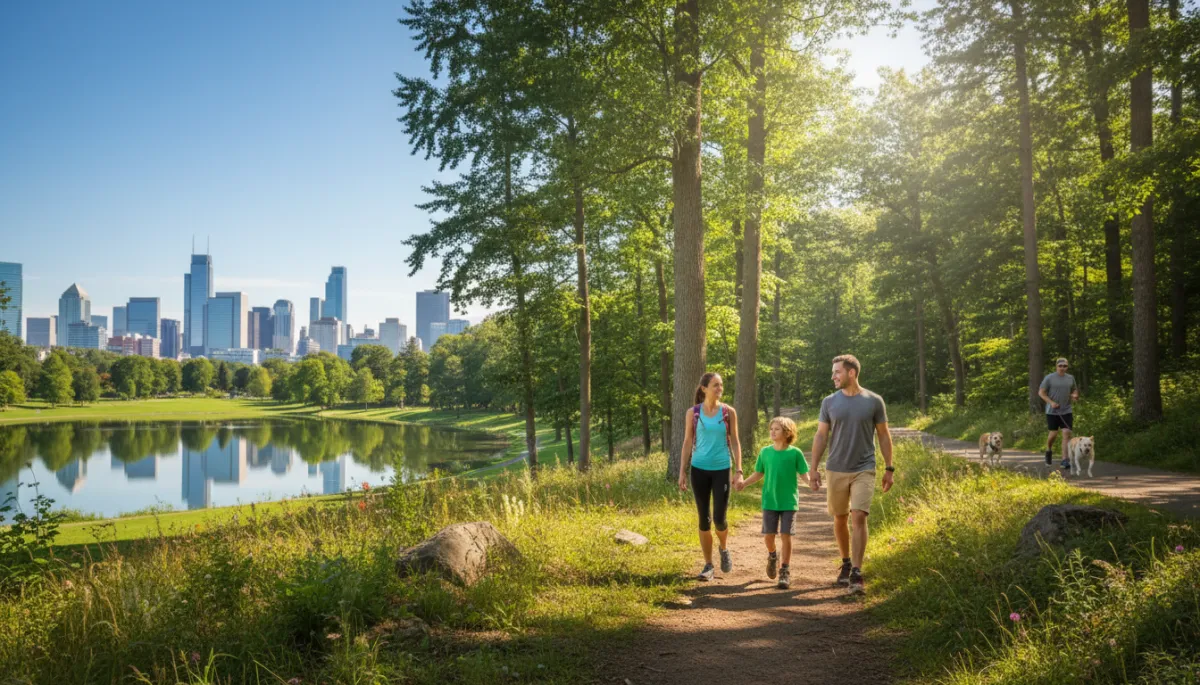
The Benefits of Living Near Parks and Green Spaces
Lifestyle, Living Near Parks, Community Green Spaces
The Hidden Value of Living Near Parks, Trails, and Open Space
Living near parks, trails, and open space is often described as “nice to have.” In reality, it’s one of the most underrated lifestyle upgrades you can make. Beyond pretty views, these community green spaces quietly support your health, happiness, and even your finances in ways that are easy to overlook day to day.
Why Living Near Parks Matters More Than You Think
When people talk about living near parks, they usually mention weekend picnics or a place to walk the dog. Those are real benefits, but they barely scratch the surface. The real value lies in how close green space subtly reshapes your routines, your stress levels, and even the way you connect with your neighbors.
Think about your typical weekday. If a park or trail is just steps away, spontaneous decisions become easier: a quick walk after dinner, a short jog before work, ten minutes on a bench between meetings. You’re not scheduling “exercise” or “self-care” weeks in advance—you’re simply using what’s right outside your door. That convenience is where the urban nature benefits really start to add up over time.
💡 Subtle shift, big impact: When green space is part of your everyday landscape, healthy choices feel natural instead of forced.
The Overlooked Benefits of Open Space
We tend to think of parks as “extras,” but the benefits of open space touch nearly every part of daily life. Open fields, tree-lined buffers, and natural preserves do more than look pretty on a brochure—they actively improve the environment you live in and how you feel in it.
Cleaner air and cooler temperatures: Trees filter pollutants and provide shade, helping to soften the “heat island” effect common in dense cities.
Natural sound buffer: Green belts and open space can reduce traffic noise, making streets feel calmer and more livable.
Mental reset on demand: Even a short view of trees, water, or open sky can lower stress and mental fatigue, especially if you work from home or spend long hours on screens.
Studies consistently show that people who live closer to green areas report higher life satisfaction and lower levels of anxiety. That’s the quiet power of urban nature benefits: you may not notice them in a single afternoon, but you absolutely feel them over months and years of daily life.
Trails and Wellness: A Built-In Health Advantage
If you’ve ever tried to start a fitness routine, you know the biggest challenge is often just getting out the door. This is where trails and wellness go hand in hand. When a walking, running, or biking trail begins within a few minutes of your home, you’ve removed one of the biggest barriers to being active: friction.
Trails offer a flexible, low-pressure way to move your body. You don’t need a gym membership, special equipment, or a specific level of fitness. You can stroll, jog, push a stroller, ride a bike, or simply wander and clear your head. Over time, these small, frequent outings become a powerful foundation for both physical and mental health.
Heart health: Regular walking or cycling on nearby trails helps support cardiovascular health without feeling like a workout “chore.”
Mood and focus: Time on a trail can act like a moving meditation, helping to ease stress and improve concentration.
Accessibility: Paved or well-maintained paths make outdoor recreation more inclusive for families, older adults, and people with mobility challenges.
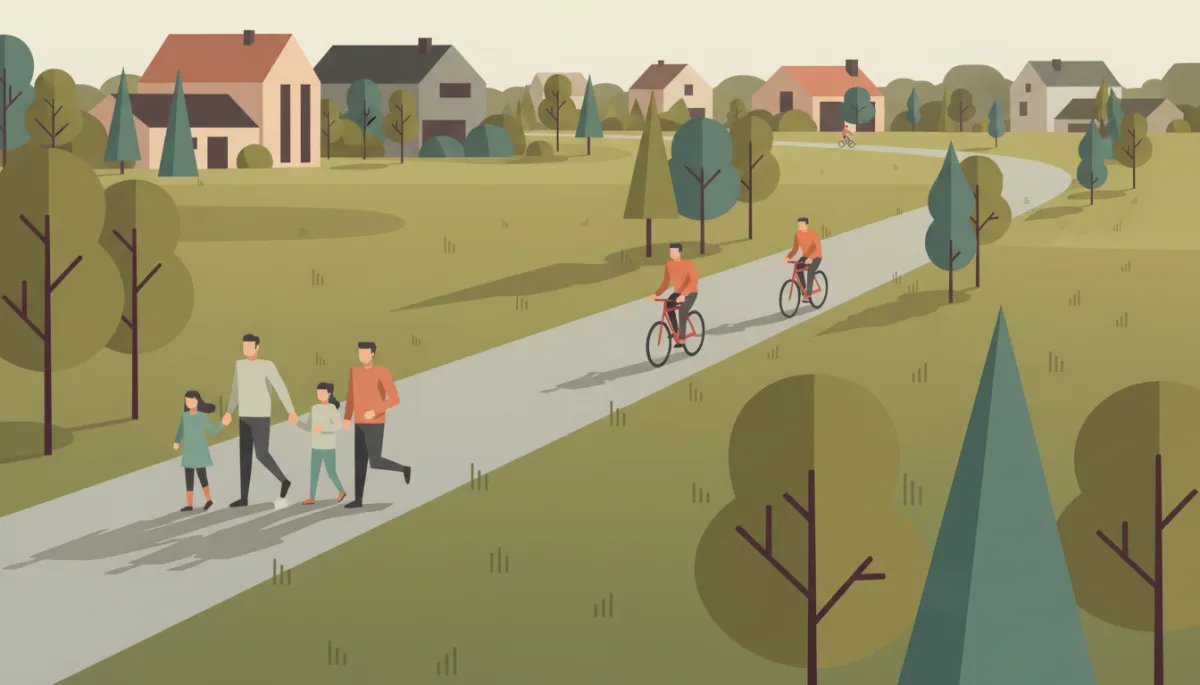
Neighborhood trails turn everyday walks into easy, enjoyable wellness rituals.
Community Green Spaces and Social Connection
One of the most underestimated advantages of community green spaces is how they bring people together. Parks, plazas, dog runs, and shared courtyards act as informal gathering spots where you can meet neighbors without the awkwardness of forced introductions. Over time, those casual “hello” moments often grow into real relationships.
Families meet at playgrounds, dog owners chat near open lawns, and weekend events like farmers’ markets or outdoor yoga classes create easy excuses to step outside and connect. These shared experiences build a sense of belonging that’s difficult to replicate in neighborhoods without shared outdoor space. In a world where many people feel isolated, that sense of community is incredibly valuable.
📌 Key takeaway: Green spaces don’t just improve your surroundings—they improve your chances of knowing and trusting the people who live around you.
Outdoor Recreation, Simplified
When you live far from parks or trails, outdoor recreation often becomes a “special trip” that you have to plan, drive to, and set aside several hours for. That can be fun, but it also means you might only do it once in a while. Living near parks flips that script. Fresh air and movement become part of your normal week, not a rare outing.
Morning walks before work, without driving anywhere.
Quick games of catch, frisbee, or soccer on a nearby field.
Impromptu picnics or sunset strolls when the weather is nice.
For families, this convenience is especially powerful. Children get more chances to run, climb, and explore; teens have safe places to gather outdoors; and adults can recharge without needing to leave the neighborhood. Over time, those everyday moments outside support better sleep, stronger bodies, and a healthier relationship with movement for everyone in the household.
Urban Nature Benefits You Can Actually Feel
The phrase urban nature benefits might sound abstract, but the experience is anything but. It’s the way your shoulders drop when you step under a canopy of trees after a long day. It’s the way a short walk helps you think through a tough decision. It’s the way your home feels like a refuge, not just a place to sleep between commutes.
Even small doses of nature can make a difference, especially in busy cities. A pocket park at the end of the street, a greenway that runs along a river, or a network of neighborhood trails can soften the hard edges of urban life. You still enjoy the energy, culture, and opportunity of the city—but with more balance, more breathing room, and more chances to step away from the noise when you need to.
The Financial Upside of Green Proximity
While this article focuses on quality of life, there’s another hidden layer of value: your home’s long-term appeal. Properties that are close to parks, trails, and preserved open space often hold their value better and can be more attractive to future buyers or renters. For many people, living near parks is not just a lifestyle preference—it’s a feature they’re actively searching for when choosing a neighborhood.
Of course, no one can guarantee how any single property will perform over time, but it’s worth recognizing that the benefits of open space aren’t only personal and emotional. They can also support the long-term desirability of the area you call home, which is another form of security and peace of mind.
Bringing It All Together: Choosing a Greener Everyday Life
When you add it all up—the easier movement, the calmer mind, the stronger sense of community, the simple joy of stepping into nature without a long drive—the hidden value of living near parks, trails and wellness corridors, and preserved open space becomes clear. These aren’t just amenities; they’re foundations for a more balanced, more fulfilling way of life.
If you’re considering a move—or simply re-evaluating what matters most in your current neighborhood—pay close attention to nearby community green spaces, trail networks, and open areas. Ask yourself how often you’d realistically use them. Picture your mornings, your evenings, your weekends. Imagine what it would feel like to have outdoor recreation and quiet nature escapes built into your daily routine instead of reserved for rare getaways.
💡 Final thought: You can’t control everything about the future, but you can choose an environment that supports the kind of life you want to live—one walk, one park bench, and one trail at a time.